Email Marketing vs SMS Marketing - Header Image - 1200x628

ROI Study: Email VS Text Message Marketing

We answer the question which channel delivers more sales in store – Email or SMS?

As a marketer, it’s important that you test the different marketing channels available to you. But with so many different channels, it can be stressful trying to identify the best option.

We want to share a recent ROI test we ran for a retail client: email marketing vs SMS.

The results will SHOCK you!

Why our client wanted to run this test

Our client is a well-known retail brand with over 100 stores. They came to us with the following issue:

The Problem: facing decreasing email open rates (less than 12%) and fewer attributed sales, they wanted to try something new.

The Challenge: before committing fully to SMS, our client wanted to test SMS campaigns, to see if there was a discernible difference in ROI between email vs SMS.

We ran a Beta program for our client, setting up a quick implementation at 1 store location to grow a store-specific marketing list by targeting their in-store foot traffic.

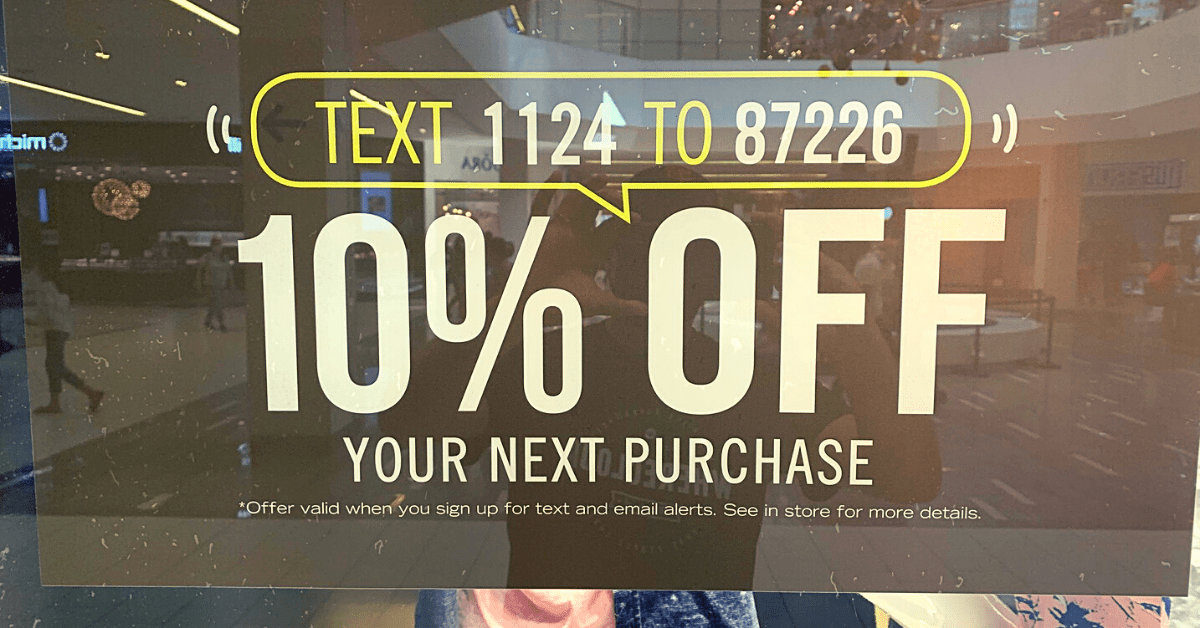
Our Text2Register program automates subscriber acquisition and validates contact information so people cannot use fake contact information. No IT involvement required. No mobile experience required.

We worked with their marketing team to make sure the branding and offer was on point.

You might also like How To Grow Your Email List Fast with SMS

How we set up the experiment:

To start, we wanted to help grow a new customer database so as to ensure that: a) subscribers were properly opted-in to our client’s marketing program; and, b) all the mobile numbers were properly collected and validated -> no fake contacts accepted.

Our customer success team set up customized text-in Keywords and Interactive Signage at 1 store location. We left the signs up for 1 month to generate a good sample size for the test.

In 1 month, we collected over 3,000 verified, opted-in email and mobile contacts by targeting in-store shoppers on their mobile devices.

Next, we ran a side-by-side campaign over email and text messaging with the same offer and unique redemption codes in order to measure attributed sales.

Our clients ran the email campaign from their existing email marketing software and we ran the text messaging campaign from the Raange Marketing Engagement Platform.

The Results

In less than 24 hours, the campaign delivered the following results:

  • Email: 15 email coupon redemptions at the cash.
  • Text: 192 sms coupon redemptions at the cash.

As you can see, the text message drove nearly instant traffic and sales to their physical retail location.

Staggering Sales Results:

  • Email: Sales uplift of  $700
  • Text: Sales uplift of $9,000

After the success of the program, our Text2Register technology was scaled to all 100 retail locations in one month. No expensive development required.

  • In one year, we added over 380,000 new subscribers to their customer database. 

In Conclusion

As you’re thinking about testing new channels and campaigns, it’s important to find the right technology providers who will work with you to test their products.

We have some more resources to show you what success can look like with Raange. Our Customer Success eGuide provides a few case studies of how we’ve helped our customers achieve success and 30X ROI.

If you have any questions whatsoever, our team is here to help so please feel free to reach out anytime.
SMS Marketing Case Study Increasing Retail Sales

SMS Marketing Case Study Increasing Retail Sales

How retailers can increase sales with sms marketing and the click of a button

BONUS RETAIL CASE STUDY AT THE END!

Customer traffic is down and you need to make sales. This is a challenge for anyone in retail today.

If you need a solution that helps you hit your sales targets during these tough days – keep on reading. 

How do I get my customer’s attention?

Customers can now be reached anywhere and at all times. Conversely, customers have more options online than they’ve ever had before, so competition is fierce for their attention.

Marketers need the type of messaging channel that guarantees delivery at 8:00 pm on a Sunday when your customer is curled up on her couch watching Netflix and browsing the latest deals on her phone. How do you get her attention and place your message – call-to-action – into her hands at this time?

Text messaging might be the only technology that provides retailers with impressive guarantees, such as:

  • 98% of messages are opened and read within minutes.
  • All of your customers can receive a text message; and,
  • No SPAM filtering that will interfere with your campaigns.

Text messages are delivered. Period. 

SMS Marketing Case Study:

So what happens to sales when you add text messaging to your marketing mix?

We recently worked with a large retail chain to test the power of text messaging. We compared a single store sale in year 1, without text messaging, to a similar sale in year 2, using text messaging.

The sales results will shock you!

  • Same Day YR 1 NO SMS – $17,000 per store on sales dates.
  • Same Day YR 2 with Raange SMS – $52,000 per store on sales dates.
  • $2,700 uplift in e-Commerce sales!

That’s a 300% increase in incremental revenue in in-store sales! Using a technology that is literally guaranteed to get your message into the hands of your customers, is a great way to drive traffic and sales to your physical stores. 

Now, think of the sales opportunities if on those slow days or the days you need to exceed same-store sales targets, you strategically send out a text message to your best customers and provide them with a timely reason to visit your stores like a 24-hour Sale… 

5 ways to grow your customer loyalty program

5 Ways To Grow Your Loyalty Program

You’ve finally found it!

The secret 5 growth levers successful retailers and brands use to grow their loyalty programs.

A well-run customer loyalty program can be a game-changer for your business. A study by Bain & Company found that increasing customer retention rates by 5% increases profits by more than 25%.

Not only that, but it costs a business 5X more to acquire new customers than it does to retain an existing customer. Implementing a loyalty program is a no-brainer, but getting people to sign up can be a problem. 

What are the most successful loyalty programs doing to increase registration rates?

Let’s look at the 5 growth levers in turn…

ProTip: #4 is what nearly 90% of retailers fail at!!…

1. Remove barriers to loyalty program sign up

Consumers no longer want to fill out a paper form, download “another” app, or navigate multiple pages to sign up for a loyalty program. The faster the initial sign up, the higher the adoption rate. The goal of registration should be obtaining minimal viable information (MVI) at the fastest speed possible. 

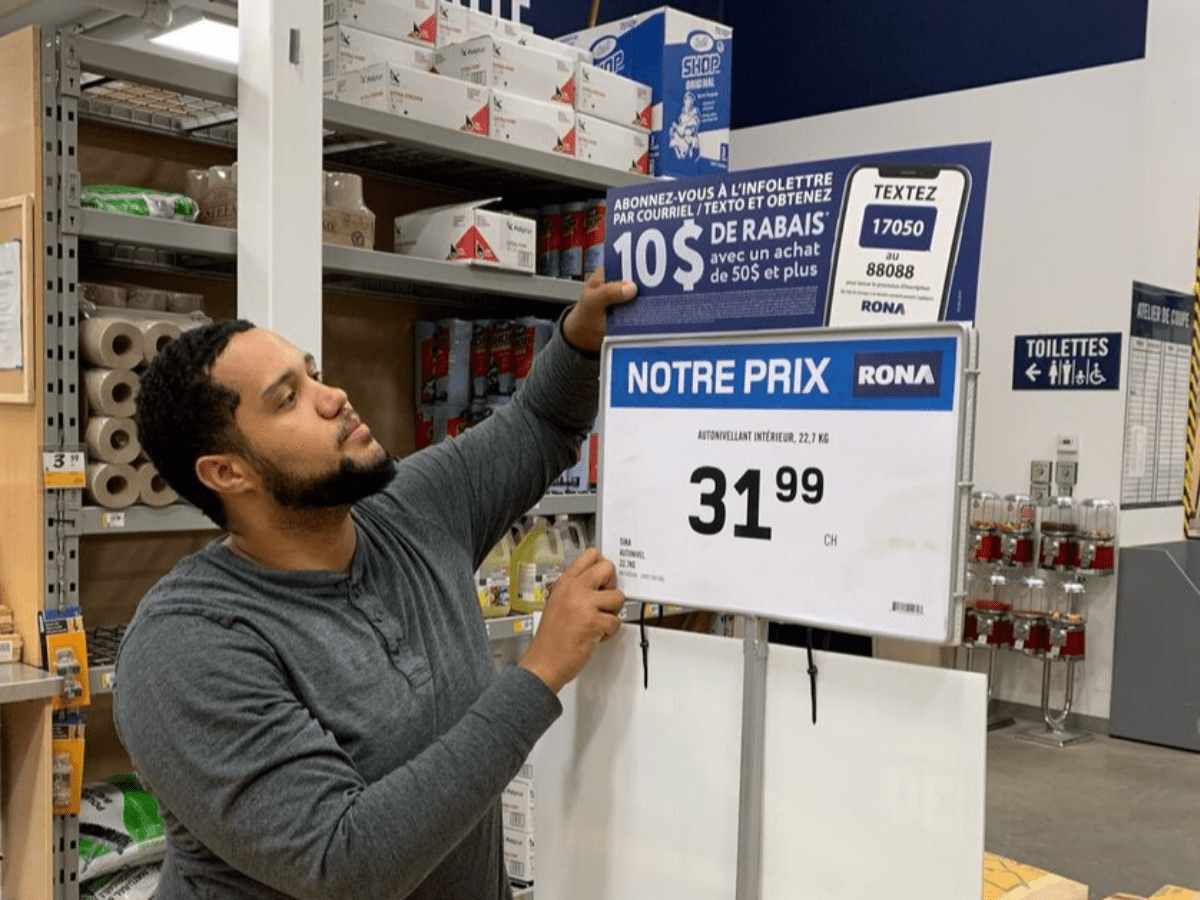
Simplify the onboarding process and give consumers an easy way to sign up for your program through digital technology that requires seconds to access and fill out a form, not minutes. QR Codes or Text-in technologies are easy ways to get forms into the hands of your customers instantly. Here’s a blog post we put together recently outlining the best ways to collect customer contact data in-store organically

2. Create instant incentives to register

When asking a customer to sign up for a loyalty program, don’t overburden them with information and allow them to ask the question: “What’s in it for me?” At this point, it’s already too late. 

Consumers love instant gratification. Provide customers with a no-brainer incentive to sign up to the MVI model, and then focus on customer activation by spending time and resources on promoting the benefits of your loyalty program.

Try offering a straightforward $5 off your next purchase with registration.

3. Go mobile

A physical card represents something tangible that consumers can touch and feel, agreed. But there is a limit to the number of cards a purse or wallet can store. Not to mention, physical cards are easy to forget or misplace. 

What are the chances your customer would misplace their mobile phone? Not very likely. Your loyalty program needs to be as convenient to access as it is to sign up. Mobile wallet-style loyalty programs might be the best solution for you and your customers. 

4. Build your owned audience

This step is where a lot of businesses fall short. Time and resources go into creating and building a successful loyalty program. However, if your program adoption rate hovers around 10-20% of your customer base, you are ignoring a large number of prospective users. You need to focus on a secondary program to collect warm prospects on the fence and eventually turn them into loyal customers. 

The best strategy to build your owned audience is to create a separate customer acquisition strategy and focus on collecting first-party contact data from customers in-store. It’s vital to build a pool of prospective customers for your loyalty program.

5. Create a retargeting campaign

As with any advertising campaign, you can expect a 1-2% conversion rate on each campaign, but you want to retarget the individuals who have shown some sign of interest. You want to retarget these pre-identified customers (See #4) to promote the benefits of your program and increase adoption once they’re ready. 

By collecting first-party contact data in your CRM, it will be 30X cheaper to contact these pre-identified customers in the future using text messaging than to run traditional digital advertising campaigns. 

Text messaging campaigns are the best way to get your messages into the hand of your customers instantly with a near-perfect delivery rate.  

In Conclusion…

Any business can implement these 5 strategic growth levers for their loyalty program. It just takes a bit of planning and the willingness to test new technologies. You can also attack this list one step at a time without overwhelming your team.

Rona_Image Raange Text to Join Interactive Sign

The Secret to Growing Subscriber Lists with SmartSigns

After co-designing, developing and installing more than 12,000 Interactive Signs (used to register more than 14 MILLION opt-in subscribers to email marketing and mobile marketing lists) for retailers and restaurants across North America, we’ve outlined what makes the BEST in-store Interactive Signage for retail.

What problem do Interactive Signs solve for brick-and-mortar retail?

A lot of responsibility and pressure is placed on the shoulders of your frontline employees. The truth is that your employees can’t be everywhere all of the time. They need help. You want to be able to digitize some of their responsibility in order to remove mundane tasks like asking for email addresses, or phone numbers.  This will open up more time for them to deliver meaningful engagements with your customers. 

What better way than using in-store digital engagement tools such as Interactive Signage as a potential competitive advantage. 

What are the elements of creating AMAZING Interactive Signage for retail?

1) Branding – Make sure all designs meet your strict branding guidelines and follow in-store experience. Get your Operations team involved as soon as possible, so you have buy-in from all relevant stakeholders. 

2) What’s Your Message or Offer? – Don’t make your customer think: avoid making the customer have to figure out your message by using an easy to understand headline – You want to connect instantly with someone walking into the door. Make sure your call-to-action is prominent and easy to understand for your on-the-move consumer.

Example: Subscribe to our newsletter. Text “Save” to 70707 and receive: 

  • Percentage of discounts
  • $X dollars off with a purchase of $Y
  • Buy one, get one free
  • $X for the price of $Y

Decide which offer model works best for your niche and your business in particular.

3) Technology – Choosing the right technology might be the most challenging part of the equation. Clients often wonder, do I use QR Codes, NFC, shortcodes, long codes, etc. Your technology and flow is dependant on your Goal for the Interactive Signage. These signs are using our patented Text2Register service, built to help you get to know your customer by quickly and compliantly collecting valuable first party using their mobile device. 

4) Placement – As they say, “If a tree falls in a forest, and no one is around to hear it, does it make a sound?” The same principle works with signs. Your Interactive Signage needs to be seen and placed where they can grab your customers attention. 

Here’s where we recommend placement:

Stanchion Sign Inserts

At the Cash

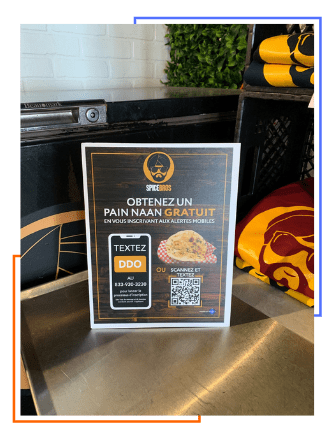
Raange - Marketing Engagement Platform - Spicebros - 334x440

Window Decals

5) Training – you want the new program to be easy to communicate at all levels of the organization, and rolled out across your brand without overwhelming costs for hardware, or technical requirements of your IT team. As with the customer, you want your employees to be able to rely on Interactive Signage to help them do their job more effectively, and the best programs have performance incentives. 

If you’re interested in learning more about this program or receiving our FULL checklist, please send us an email at matt@raange.com

How to get started with Raange?

Ready to give Canada’s Most Affordable SMS Marketing solution a try? SMS short code marketing in Canada is simple and easy with Raange. To get started with Raange, you can also request a demo. Alternatively, you can call us at (844) 472-2643.

3 Creative Ways for Retailers To Capture First Party Data

First-party data is undoubtedly among the most valuable assets for a company’s marketing efforts. However, just like any high-quality information, this type of data is fairly complicated to acquire. Poor data quality doesn’t just cause campaigns to be inefficient, it often leads to bad business decisions, poor sales forecasts, and unsatisfactory customer experience.

In this article, we’ll look into various ways retail marketers can creatively capture quality first-party consumer data.

What’s the issue?

Some recently published studies report on how widespread the phenomenon of inaccurate first-party data appears to be in the current business environment.

A study conducted by Experian, states that a whopping 91% of companies suffer from data-related issues, such as outdated, incomplete, and inaccurate information provided by their customers.

Veeva customer data satisfaction

Furthermore, another report presented by Veeva indicates that 66% of respondents consider that a complete and real-time view of the customer is a top priority for their customer reference data. Additionally, the same study suggests that companies lose about 12% of their revenue to inaccurate customer information.

How can retailers collect accurate data?

When it comes to collecting first-party data efficiently, retailers have lots of ground for experiments. First off, they can use their websites to capture information from their customers, along with using social media for collecting information from their audience.

A great percentage of modern-day internet users can be considered digitally-savvy, meaning that we need to inquire for their information in a more interactive manner. Simply asking for their data is no longer a viable strategy, it’s essential to entertain and engage.

Have you tried SMS Shortcodes?

SMS short codes are another increasingly popular way of collecting highly-accurate customer data. Essential information like email addresses, postal codes, sex, age, and others can be obtained via SMS short codes.

The efficiency of short codes is also defined by how quickly clients react to them. In a previous article, we touched on the difference between SMS messages and emails, and chances are, we’re going to see more and more companies adopting short codes as a way to improve their interaction with their customers.

There have been reports that by just sending out three messages via short codes can increase conversions threefold.

Creative approaches to data collection

Social media is a great place to obtain accurate information. For example, Instagram stories is a highly efficient medium for incorporating links to forms in exchange for certain value to the customer — anything from unlocking special content and participating in giveaways to coupons for products and services.

Here’s how Vodafone has used Instagram stories as a way to collect first-party data:

Another option is to gather user-generated content via social media platforms by hosting contests that require photo submissions, polls, and flock-to-unlock mechanisms that have proven to increase audience engagement considerably.

Here’s how Urban Planet has used contests on social media as a way to increase engagement, social media followers and collect first-party data:

The takeaway

Despite being the most efficient type of customer information, first-party data is still prone to being inaccurate.

Businesses now need to ask for their customers’ information by using more interactive mediums. This is why retailers need to look into more creative approaches to motivating their audience to share their data and user-generated content, like using social media and SMS short codes.

sms marketing messages

3 Tips to Writing The Perfect Marketing Text Message

3 Tips to Writing The Perfect Marketing Text Message.

For many businesses, getting the right message into the hands of their customers can mean increased conversions during this chaotic time of the year. And text message marketing is still the best channel to get your customer’s attention with a 98% open rate!

Last year alone, we sent more than 250 MILLION mobile alerts. In advance of the holidays, our team analyzed our most impactful messages (measured by conversions) from the last year and put together this easy-to-follow guide to writing marketing text messages that are: 1) Opened; 2) Read; and, 3) Actioned.

Let’s look at 3 tips for writing the perfect marketing text message for Black Friday.

#3 is the MOST IMPORTANT TIP and the strategy most marketers get wrong.

1. OPENED: Make sure to brand your text message 


Any text message you send needs to begin with your brand’s name. In this example, you’ll see the brand name is even segmented down to the store-level, which adds a layer of local loyalty to your messages. 

The main reason to add the brand at the very beginning is to ensure your customers see a trusted        name in their Messages List (the window they first see when they open their app) and will open the message to continue reading.

2. READ: When writing a text message Get to the Point 

After you’ve introduced the brand, it’s critical to get right to the point! Provide a strong offer right away. In this example, you’ll see how Urban Planet introduces the sale right away and a compelling offer. You want to get your customers’ attention immediately. By doing this, you’ve given them a reason to finish reading the text. 

Finally, you want to include the exact ways to redeem this offer – in-store or online. If it can be redeemed online, make sure to include any relevant coupon code or a link to click-through to the offer page.

3. ACTIONED: Create urgency in your text messages

Creating a time-limited event is a great way to create a sense of urgency in your customers. It’s not enough to get them to open and read the message, but we want them to take action. So tying any coupon or offer to a 24 Hour Sale (our favorite) will increase the probability of your customer going to the physical store or online to redeem the offer. 

It’s no longer enough to share the event or offer of a sale. Your customers are busy people and always on the go. When you have your customer’s attention, it’s important to take advantage of the situation by offering a near-instant incentive. – E.g., Unique coupon code that is valid over the next 24 hours.

We’re confident that if you follow our formula for writing the perfect marketing text messages, you’ll see higher conversion rates this holiday season. 

Previous Posts You Might Like:

Blog: Text Message Marketing is the Best Channel to Send eFlyers

Why Text Message Marketing is the Best Channel to Send Your Flyers

“All that is new is well-forgotten old,” they say. We continuously reinvent the things that have served us for decades and centuries and improve them to make them even more efficient. We are confident that it’s time to reinvent printed flyers by making them more cost-effective and ecologically-neutral.

Furthermore, print marketing allows little to no interaction between your potential customers and the medium where they can purchase your products and services. Whereas mobile channels provide prospects with immediate access to your online store, thus significantly increasing the efficiency of flyer distribution.

Why opt for Text Message distribution?

Text marketing is an excellent solution for businesses that have benefited from using flyers but are looking for an even better result. These days, a huge percentage of people living in North America own a smartphone, which allows companies to stay in touch with their clients in a wide variety of methods that are most suitable for them

The reason you should be looking into improving your reach with eFlyer marketing is its relevance. Very little people listen to the radio or watch television daily, especially millennials. Channels like SMS and social media platforms allow much greater personalization and a better understanding of your target audience.

Sending flyers via SMS Marketing

Text message marketing is one of the most actively growing mediums of the last few years. Professionals are now seeing impressive open rates that are in orders of magnitude greater than the ones email marketing can offer.

Plus, SMS messages are operating system agnostic. Both iPhone and Android users will receive the same flyer, whatever platform they use.

The most significant distinction between printed and digital flyer distribution is the time needed to deliver them. SMS and MMS messages are incredibly quick. It won’t take long to deliver over 10.000 text messages, while it may take multiple days for two or three people to distribute the same amount of printed ads. Not to mention that in many cases printed flyers are discarded immediately without even being given any attention whatsoever.

Up your income and grow your database

In order to keep your campaigns relevant, businesses need to invest some time and effort into building a database of clients that are interested in receiving information about their new and upcoming offers.

The best way to build databases and increase your sales is to collect some of the customers’ data in exchange for a discount. This way, you’ll ensure that the information you deliver is relevant and exciting to your customers. Check out our recent article on the best tactics for capturing customer data for your databases.

Conclusion

Modern technology provides businesses with exciting new opportunities for reaching their clientele even more seamlessly and efficiently. This is why we are very fond of mobile mediums like SMS, MMS, and various messengers, as they are an essential step towards growing customer engagement and significantly boosting your business’s turnaround.

The 5 Most Important Mobile Channels for Retailers

5 Most Important Mobile Channels For Retailers

Whatever product you’re selling, having access to first-party data will considerably improve your sales, given that you use this data correctly. In previous articles, we’ve touched on how vital sourcing accurate customer information is. Despite being a hefty task, there are many ways business owners can manage to collect authentic first-party data.

Many retail businesses are facing less foot traffic and a significant decrease in sales, and often the reason lies in choosing the wrong channels of communication with their clientele. Marketers are now exploring more creative channels for interaction with their potential and existing customers. While the contents don’t change significantly, there are many new mediums to explore.

Mobile marketing is on the rise

The typical internet user is desensitized to paid ads. Moreover, nearly half of the respondents in a study conducted by Harris Interactive, stated that they ignore banner ads altogether, especially when they aren’t presented to them at a comfortable time. Furthermore, it seems that for the average user, ignoring banners has become somewhat of a cognitive instinct.

Mobile marketing, on the other hand, is a valuable medium that users tend to take seriously — SMS messages have a staggering 98% open rate, compared to less than  20% of open rate for emails in the retail industry, depending on the industry.

The versatility of text messaging

By personally collecting phone numbers and email addresses from their customers, businesses can meaningfully interact with them via text messaging or email marketing.

SMS

There are many short message types that are currently popular among retail marketers. Distributing them is beneficial to both businesses and their recipients.

The latter enjoy quick and valuable information about products that interest them, whereas the former can collect even more first-party data about their customers’ preferences while getting their message across. Here are the most common message types distributed by retail marketers:

  • Special offers, holiday discounts, last-minute offers
  • Text alerts for sales events.
  • Mobile coupons
  • SMS gift cards
  • Delivery confirmation

While sending your customers promotions and special offers is a wildly successful means of communication, it’s by far not everything that text message marketing has in store. Retail marketers have seen a 3000% ROI on SMS campaigns. Test your company’s potential sms results using our ROI Calculator.

Short codes

Short codes have been a popular means of interaction between businesses and their customers for quite a while. Just like SMS messaging, short codes are impressively efficient. Retail marketers can use first-party data that has been collected at the POS to interact with customers, but also to collect other data from their requests and interactions with the consumers.  

It’s safe to say that business-to-customer communication shouldn’t be lasered in on a single channel. By diversifying their approach, retail marketers will be able to experience the benefits of each channel and also provide their customers with the possibility to choose their preferred means of communication.

iMessage

An Apple-exclusive — iMessage provides marketers with all the benefits of text messaging, along with impressive extended functionalities like link preview and integrated images. This provides for a much more engaging and interactive layout medium, compared to just plain text messages.

The significant change came in 2016, when users were finally able to open links to images in iMessage directly, instead of having to be redirected to Safari, in order to open the image, which is obviously a very disruptive process.

Furthermore, Apple’s native messaging app can also play multimedia messages too. So in case you’re feeling adventurous, you can integrate videos and audio messages into your iMessage strategy as well.

Facebook messaging

The reason Facebook Messenger provides businesses with impressive results is that it makes commerce more personal. Furthermore, it’s an excellent vessel for providing your clientele with interactive messages as well. Due to the more engaging nature of these exchanges, Messenger offers an open rate that is almost 250% greater than an average email, and a 620% higher click rate.

Similar to short codes, Messenger is a fantastic medium for collecting data from your customers/audience.

Here are just a few ways you can optimize the communication with your customers via Messenger, while being able to collect supplementary first-party data from these interactions. You can:

  • Replace feedback and poll forms with Messenger bots.
  • Distribute invitations to live events or in-store promotions.
  • Deliver blog content via chat.
  • Re-engage customers with relevant ads.
  • Ensure impeccable customer support.

Email marketing

Despite being a fairly old medium, email still appears to be among the most popular channels for marketers to reach out to their clients. Despite not being able to boast about stellar open rates, the email does provide a good ROI. Some marketers report a 44:1 return-on-investment ratio on their email marketing campaigns.

The wrap-up

First-party data, when used correctly, will provide businesses with massive benefits. Besides the obvious, but highly important increase in sales, marketers apply first-party data to collect even more customer information from interacting with them, thus engaging customers even more.

Accumulating more detailed and intricate information about your clients’ preferences will let you tailor more personalized and highly attractive ads, meaningful B2C interactions, along with valuable promotions and offers.

Raange Text to Join | Interactive Sign

Difference between an SMS short code and SMS long code?

Today, we’re discussing the two most popular ways of sending SMS messages for business — SMS short code and SMS long code. We’re really passionate about SMS marketing, and we’ve written extensively on the benefits and applications of text messages.

In this article, we’re going to look into the essential differences between sms short codes vs sms long codes and establish which one your business should consider.

SMS Short Codes

A shortcode is typically a 5- or 6-digit number which businesses use for marketing communications, large one-to-many mobile messaging campaigns and/or to allow customers to text a keyword to opt-in for text alerts. 

If you’re a retailer, you would have customers text “SAVE” to 70707 to receive text alerts.

There are a lot of reasons why so many companies choose to use short codes. It can handle impressive amounts of SMS messages – hundreds per second, which is vital for large businesses needing to send time-sensitive offers or messages. For example, medium and large-chain retailers are able to send discount codes, coupons, alerts, reminders, and confirmations to a large number of contacts quickly.

Short codes are more expensive than long codes and have to be approved by carriers. Fortunately, Raange offers shared short codes to remove the time required for approval by carriers, and substantially reduce the cost of using one.

What about SMS Long Codes?

Long codes differ from short codes in many aspects, the most obvious of which is their length — long codes are ten digits long. Long code messaging is designed for P2P (person to person) interaction. 

One of the most significant advantages that long codes have to offer is the seamless two-end communication between a business and its clientele, since a business can use the same number to send voice messages, SMS and make phone calls with your customers.

The only problem is that they’re not as memorable as short codes. There’s no mystery behind why ten digits are harder to memorize, compared to five, or six. 

While short codes can handle up to 100 SMS messages per second, long codes typically can only handle a single SMS per second, which is considerably slower. In addition, you’re unable to send large outbound messaging campaigns using long codes, as carriers tend to shut down campaigns once 20 or more messages are sent out from the same number.

Long codes are inexpensive and don’t need to be approved.

Which one should you choose?

If you’re looking to choose a code that will represent your business, you must make a decision based on your budget and the functionality you’re after. If your budget is limited and you’re looking at low volume messaging (think small business) — you should probably opt for a long code. 

The way we see it, short codes offer a set of benefits that is considerably broader than what long codes have to offer by any stretch of the imagination. More importantly, short codes are easy-to-remember, which will significantly benefit the extent to which your customers will engage with it. 

Conclusion

SMS marketing has proven to be among the most efficient channels for higher customer engagement, and both long codes and short codes are its essential components. Short codes are an excellent way for large businesses to stay in touch with their customers and establish a meaningful interaction.

SMS Marketing vs Paid Advertising - Cost Comparison

SMS Marketing vs Paid Advertising – Cost Comparison

What is cost per acquisition?

Cost Per Acquisition (CPA) is an essential metric that helps businesses measure how well their marketing campaigns perform compared to their competition. Essentially, CPA reflects how much a company had to pay in advertising, in order to convert a person into becoming their customer. 

Campaigns that are well executed and designed will typically have a lower cost per acquisition, given that customers are interested in the product, and there is little friction in the conversion process. In this article, we’re going to compare what the CPC and CPA benchmarks are for the retail industry when performed via social advertising and sms marketing Text2Join technology can exceed that manifold. 

What are the cost per acquisition avgs for Retail?

Acquisio has recently published an in-depth study on the benchmarks specific to particular industries that have been calculated by analyzing over 50.000 campaigns from 11.000 different advertisers from Canada, Australia, and the US. 

The study has found that the standard CTR in the retail industry is 3.49% if done without machine learning optimization (ML) and 4.36% if done with ML. 

The cost per acquisition in the retail industry was reasonably high, averaging at $41.47 without and $37.98 with ML.

Big social platform advertising costs

At Raange, we strongly believe in the power of first-party data, which can provide great benefits to businesses that are looking to expand their reach to a more significant number of customers. Our Text2Join technology allows businesses to convert new customers at a considerably lower cost than traditional social media platforms.

Here are the average advertising costs on various social media platforms: 

  • Facebook — $0.98/click
  • Instagram — $3.55/click
  • YouTube — $3.20/click
  • LinkedIn — $5.25/click
  • Twitter — $0.39/click
  • Pinterest — $1.51/click

And this is what sms marketing has to offer

Customers that run campaigns via our Text2Join technology pay an average cost per click of $0.20, which is nearly 2X more affordable than the cheapest social media option. 

Furthermore, the average CTR on Text2Join campaigns is 85%, which is 18 times more efficient than Machine Learning-enhanced campaigns we touched on above, subscriber conversion rates average at 90%.

When our Text2Join technology is paired with an incentive to purchase like a coupon, 80% of consumers that converted as a subscriber make a purchase within a 24 hour period. 

Your cost per acquisition can be below $1.00 using our Text2Join technology – making it both considerably more efficient and cost-effective. 

Another massive benefit of using our service is that you’ll have access to first-party data, which you can then use for your future marketing efforts. We’ve written a lot about the benefits of first-party data, and we firmly believe that businesses will significantly benefit from owning their own customer data.