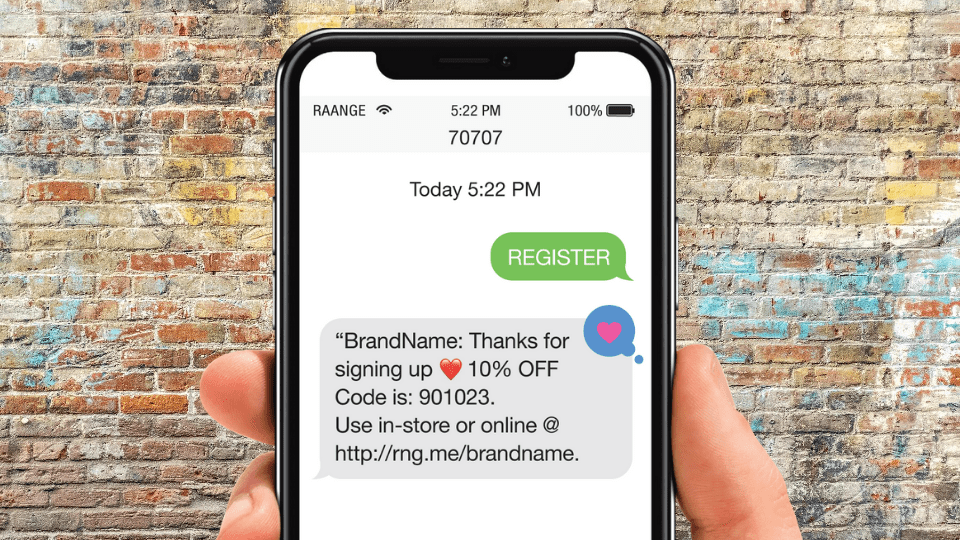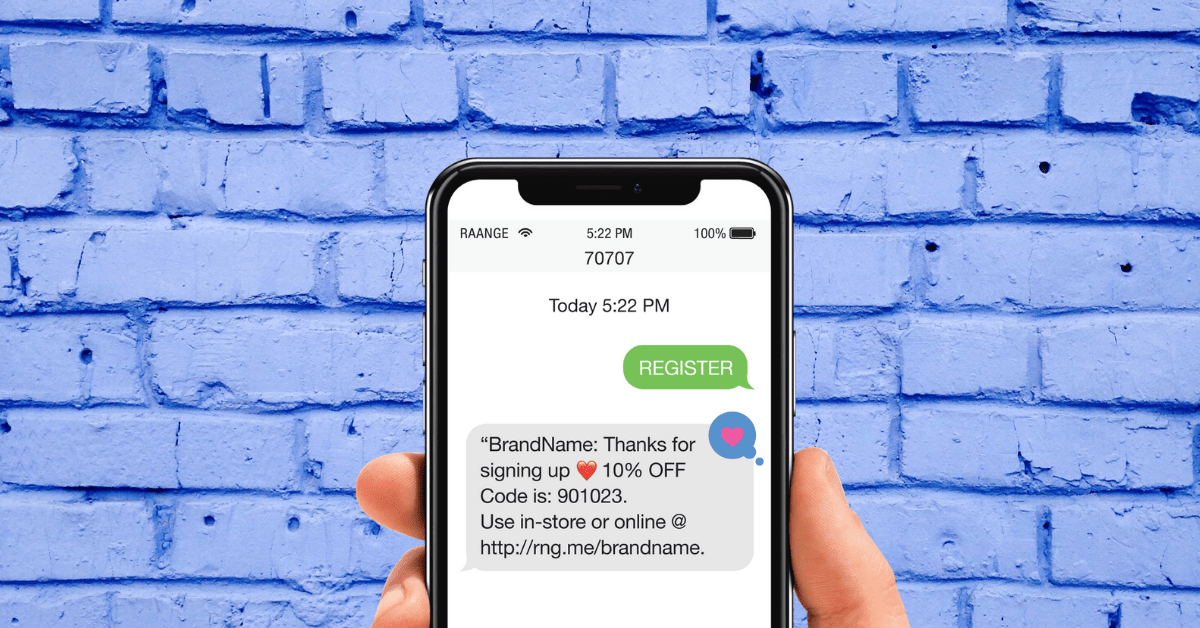

sms marketing vs email marketing - which gets more sales - header image - 1200x627

SMS Marketing VS Email Marketing: Which Gets More Sales

We answer the question which channel delivers more sales in store – Email or SMS?

As a marketer, it’s important that you test the different marketing channels available to you. But with so many different channels, it can be stressful trying to identify the best option.

We want to share a recent ROI test we ran for a retail client: email marketing vs SMS.

The results will SHOCK you!

Why our client wanted to test email marketing vs sms marketing

Our client is a well-known retail brand with over 100 stores. They came to us with the following issue:

The Problem: facing decreasing email open rates (less than 12%) and fewer attributed sales, they wanted to try something new.

The Challenge: before committing fully to SMS, our client wanted to test SMS campaigns, to see if there was a discernible difference in ROI between email vs SMS.

We ran a Beta program for our client, setting up a quick implementation at 1 store location to grow a store-specific marketing list by targeting their in-store foot traffic.

Our Text2Register program automates subscriber acquisition and validates contact information so people cannot use fake contact information. No IT involvement required. No mobile experience required.

We worked with their marketing team to make sure the branding and offer was on point.

Raange | Text2Register Signage

You might also like How To Grow Your Email List Fast with SMS

How we set up the experiment:

To start, we wanted to help grow a new customer database so as to ensure that: a) subscribers were properly opted-in to our client’s marketing program; and, b) all the mobile numbers were properly collected and validated -> no fake contacts accepted.

Our customer success team set up customized text-in Keywords and Interactive Signage at 1 store location. We left the signs up for 1 month to generate a good sample size for the test.

In 1 month, we collected over 3,000 verified, opted-in email and mobile contacts by targeting in-store shoppers on their mobile devices.

Next, we ran a side-by-side campaign over email and text messaging with the same offer and unique redemption codes in order to measure attributed sales.

Our clients ran the email campaign from their existing email marketing software and we ran the text messaging campaign from the Raange Marketing Engagement Platform.

The Results of our email vs sms test

In less than 24 hours, the campaign delivered the following results:

  • Email: 15 email coupon redemptions at the cash.
  • Text: 192 sms coupon redemptions at the cash.

As you can see, the text message drove nearly instant traffic and sales to their physical retail location.

Staggering Sales Results:

  • Email: Sales uplift of  $700
  • Text: Sales uplift of $9,000

After the success of the program, our Text2Register technology was scaled to all 100 retail locations in one month. No expensive development required.

  • In one year, we added over 380,000 new subscribers to their customer database. 

In Conclusion

As you’re thinking about testing new channels and campaigns, it’s important to find the right technology providers who will work with you to test their products.

We have some more resources to show you what success can look like with Raange. Our Customer Success eGuide provides a few case studies of how we’ve helped our customers achieve success and 30X ROI.

If you have any questions whatsoever, our team is here to help so please feel free to reach out anytime.

SMS short code example

What is an SMS Short Code and Who Should Use It?

What is an SMS Short Code?

SMS short code is a 5-6 digit phone number, specifically designed for companies to send mass text messages to their customers.

Businesses, governments, charities, brands, etc. use short codes for marketing communications, large one-to-many mobile messaging campaigns and/or to allow mobile users to text a keyword to opt-in for text alerts. 

Short Codes are designed to be easily read and remembered instead of long numbers. This helps to increase response rates.

If you’re looking for more info on long numbers (codes), we did a post comparing SMS short codes to long codes.

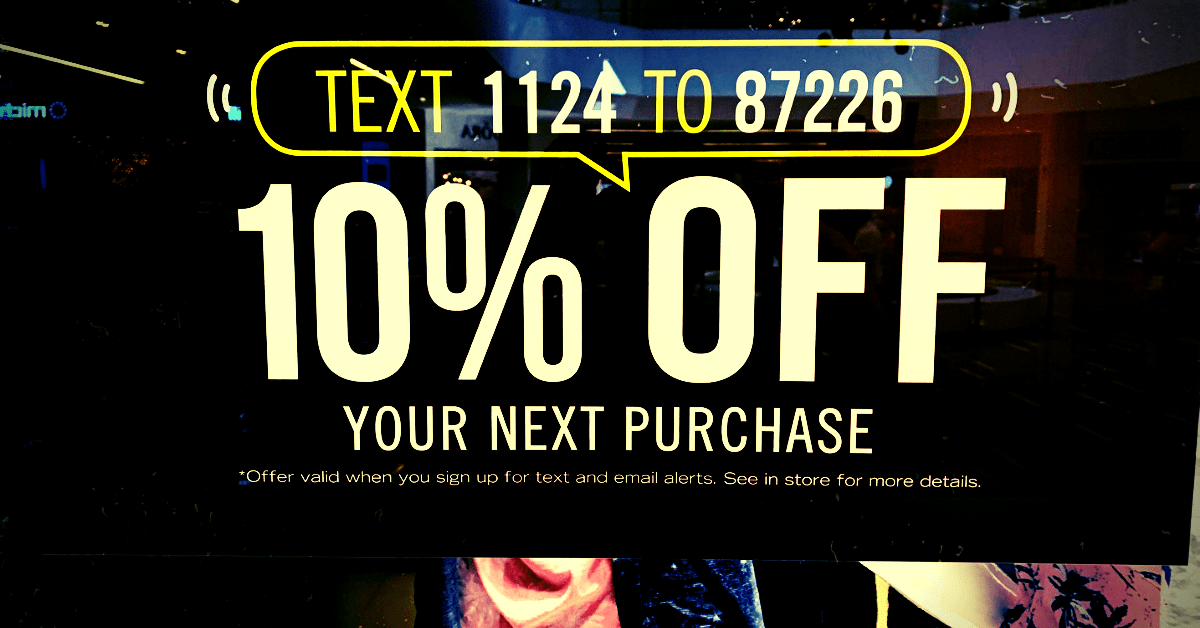
If you’re a retailer, you would have customers text “SAVE” to 70707 to receive text alerts. Easy.

There are 3 different types of Short Codes

Shared short codes

This is a 5-6 digit phone number that multiple companies can lease to leverage short code functionality in their business.

A dedicated short code (see below) can cost around $1,000 to procure, plus a set up fee and a monthly carrying fee as well. The cost can be too expensive for smaller brands, so they would opt for a shared short code.

However, in Canada particularly, carriers recently have been restricting or stopping the use of shared short code programs.

Dedicated short code

Random 5-6 digit phone number that is owned and operated by one company.

If you’re looking for maximum scalability, the dedicated short code is the way to go.

Don’t be confused, one brand can use 1 single dedicated short code across multiple store locations.

Vanity short code

A vanity short code is a 5-6 digit number you can choose or customize, providing the number you want is not already secured by another company.

You can choose the numbers in the code so they’re easier to remember or have a relevance to your company.

For example, a Pizza chain could use the short code PIZZA (74992) for all of their store locations’ SMS communications.

Larger companies see this as an important brand asset as it’s very easy for customers or users to remember and share, plus give you a competitive edge if there’s only one relevant industry vanity short code available.

How can Short Codes be used?

SMS Short Codes can be used as a direct response channel for television, radio, print advertising, outdoor advertising like billboards and in-store signage.

Short codes can be used as a customer relations marketing tool. They are an excellent mechanism to register for promotions, links to downloads, request a call-back, or donate to charities.

Short codes are also great tools for mass SMS (text) message marketing campaigns, giving you the ability to send high volumes of messages (millions) in a short period of time.

Who should use SMS short codes?

There are a lot of reasons why so many companies choose to use short codes. It can handle impressive amounts of SMS messages – hundreds per second, which is vital for large businesses needing to send time-sensitive offers or messages.

Short codes should be used by organizations that can afford the monthly fee and send high volumes of messages monthly. Short codes are more expensive than long codes and have to be approved by carriers.

If you’re a small business, Toll Free numbers or Long Codes are right for you!

SMS Short Code directories

Want to know which businesses or organizations are using which short code? Check out these handy directories:

Canadian Directory (txt.ca)

USA Directory

In Canada, you can also find preferred messaging partners as outlined by the CWTA. Raange can be found under the Application Service Provider, which is a fancy way of saying a marketing platform.

In Conclusion

Short codes are considered the premier form of mass text messaging and are preferred messaging channel for medium and large businesses.

SMS marketing has proven to be among the most efficient channels for higher customer engagement, and both long codes and short codes are its essential components. Short codes are an excellent way for large businesses to stay in touch with their customers and establish a meaningful relationship.

Fortunately, Raange offers shared short codes to remove the time required for approval by carriers, and substantially reduce the cost of using one.

If you have any questions whatsoever, our team is here to help so please feel free to reach out anytime.

How to grow your email list fast with SMS

Growing your email marketing list with SMS is probably easier than you think and could be the secret weapon to growth you’ve been looking for!

As a marketer, it’s your job to continuously search for new ways and new channels to fill your all-important opt-in email list for your brand.

Sometimes adding new opt-in email contacts to your marketing list feels like a zero-sum game because email marketing databases degrade by about 22% EVERY YEAR.

Previously, we’ve talked about the benefits of using SMS marketing instead of Email marketing

I’m here to let you in on a little secret: SMS and Email don’t have to compete with one another. SMS can be your #1 tool to growing your email marketing list.

SMS Is Great for Customer Acquisition

By this point, you’ve probably tried many, many different ways to grow your opt-in email marketing list: giveaways, online contests, website forms, display ads, collecting email addresses at the cash. And the list goes on… and on… and on..

Have you tried using SMS to grow your email marketing list?

SMS is an increasingly popular way of collecting highly-accurate customer data. Essential information like email addresses, mobile numbers, postal codes, sex, age, and others can be obtained via SMS.

But why is SMS a popular channel?

Using SMS to automate subscriber acquisition can help you remove manual inputs like sales associates typing in information and reduce fake contact information.

Benefits of SMS we’ve listed in the past

We’ve gone through the Top 10 SMS Marketing stats that will shock you in the past, so we picked a few of our favourites:

1) SMS open rates beat email fivefold

You don’t have to search in the spam folder for an SMS. Yes, people open their emails much less often than they read their SMS messages. Research suggests that over 90% of SMS messages opened within the first five minutes, whereas only 25% of all emails are opened at all.

2) Millennials love it!

Three-quarters of surveyed millennials prefer communicating via SMS for deliveries, promotions, and surveys.

3) Customers want text promotions!

If you’re not sure if you should ask your customers to opt into your SMS newsletters — go for it! Studies suggest that over half of the customers that have chosen to provide their phone numbers to businesses did it to receive notifications from the brand. SMS is an excellent medium if the communication brings them actual value.

4) We check our phones first thing in the morning

If you feel that you’re the only one doing it — no need to feel guilty. Nearly 80% of the participants in a recent study have stated that the first thing they do when they wake up is check their phone. Which is suggestive of the reason why SMS is such an effective medium.

SMS, or text messages, is a channel that people love to use, so it’s a great way to connect with your audience and ask them for that all-important opt-in email contact.

How does SMS work for Email Acquisition?

Using text-in keywords and mobile forms, you can easily get your customers to pull out their mobile phone and text-in to sign up for:

  • VIP Alerts
  • eNewsletters
  • Promotions
  • Coupons

and more….

The key is to connect the incentive with an email opt-in for your marketing list.

ProTip: Interactive Signs – like the one you see above – is the best way to grow your email and mobile marketing lists for brick and mortar brands.

SMS Tactics to Grow Your Email Marketing List

Now that you have a better idea as to how it works, what are some ways that companies are using SMS to build their email lists?

1) Radio and Podcasts:

Radio promotions and podcasts especially are really popular forms of advertising as you have the listener’s attention. Normally, brands simply use a 10s spot to promote a product and then provide a confusing coupon code that can only be redeemed at an equally confusing web url. Instead, brands are cleaning up their voice ads to include promotions like “text ‘JOIN’ to ‘55055’ to get 5% off your next purchase.”

2) Brick and Mortar (In Store):

Instead of asking people for their email addresses at the cash, brands are asking customers to subscribe to eNewsletters or activate a promotion by texting and registering to receive marketing promotions. As you can see in the image above, in-store Interactive Signage is the best way to display these promotions. Plus these promotions can be placed anywhere in the store.

3) Direct to Consumer Flyers:

When you receive a flyer in the mail not many people like to pull out their phone, open a browser and start typing in a confusing 30 character URL to get a promotion. It’s a lot easier to have people text-in a keyword to short code to get started.

In Conclusion

SMS is a fantastic tool to help you grow your email marketing lists faster. Combined with a great CTA or promotion, you can easily set up a campaign and let it run on autopilot.

Taking these tactics and working with partner like Raange, you will have a winning combination.

Now that you have a better understanding of how to email and SMS work together, we have some more resources to show you what success can look like with Raange. Our Customer Success eGuide provides a few examples of how we’ve helped our customers achieve success and 30X ROI.

If you have any questions whatsoever, our team is here to help so please feel free to reach out anytime.

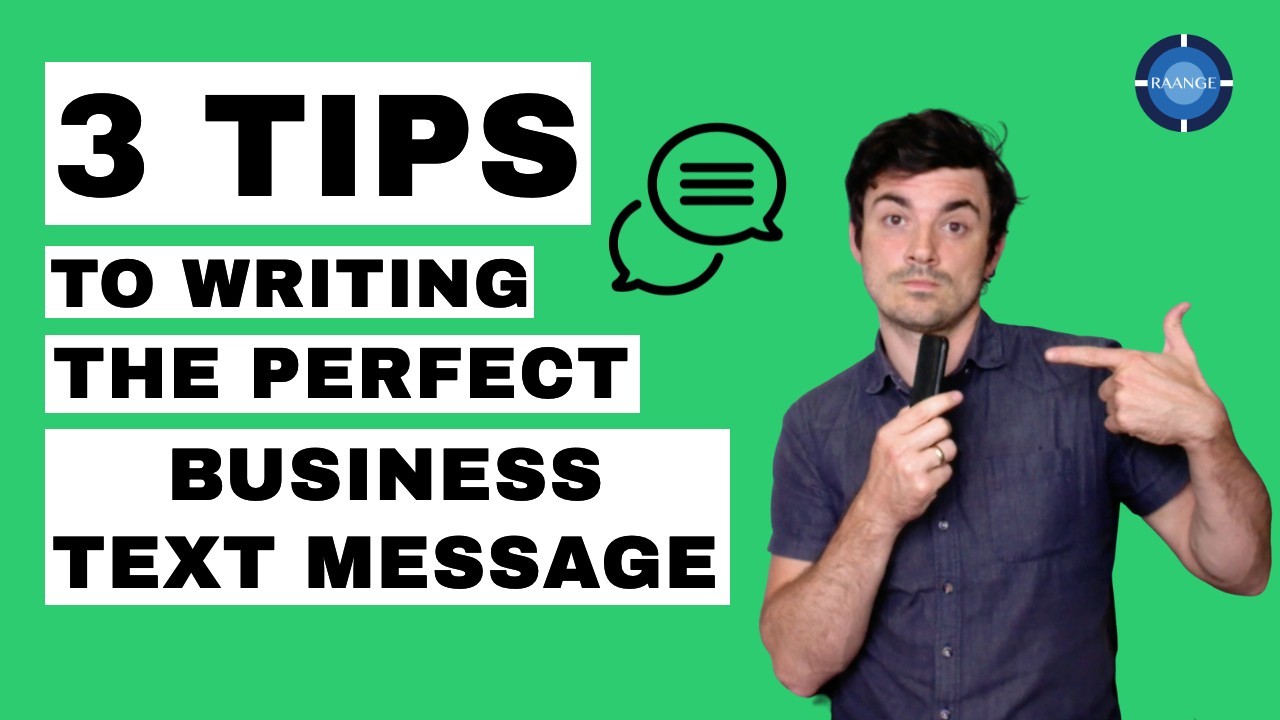
3 tips to writing the perfect business text message - Header Image - 1280x720

SMS Marketing Best Practices: 3 Tips to Writing The Perfect Message

The following 3 best practices for writing the perfect SMS marketing message will provide you with a simple and easy to follow framework for writing SMS marketing copy.

SMS marketing, also known as text message marketing, is one of the best channels for communicating with your audience – anytime, anywhere.

For many businesses, getting the right message into the hands of their customers can mean increased conversions because text message marketing is still the best channel to get your customer’s attention with a 98% open rate!

SMS messages, however, has a 160 character limit, which is one of the biggest pain points for marketers: writing the perfect marketing copy with so few characters.

Because writing SMS marketing copy can be a big challenge, we’ve looked through our recommendations for our customers and turned them into this top 3 list of best practices for you to review and follow when writing your next campaign. If you’re interested in learning more, you can check out our eGuide to writing the perfect SMS marketing message.

Let’s look at 3 tips for writing the perfect marketing text message for marketers.

#3 is the MOST IMPORTANT TIP and the strategy most marketers get wrong.

1. OPENED: Make sure to brand your SMS marketing message 


Any text message you send needs to begin with your brand’s name. In this example, you’ll see the brand name is even segmented down to the store-level, which adds a layer of local loyalty to your messages. 

The main reason to add the brand at the very beginning is to ensure your customers see a trusted name in their Messages List (the window they first see when they open their app) and will open the message to continue reading.

2. READ: When writing a SMS marketing message Get to the Point 

After you’ve introduced the brand, it’s critical to get right to the point! Provide a strong offer right away. In this example, you’ll see how Urban Planet introduces the sale right away and a compelling offer. You want to get your customers’ attention immediately. By doing this, you’ve given them a reason to finish reading the text. 

Finally, you want to include the exact ways to redeem this offer – in-store or online. If it can be redeemed online, make sure to include any relevant coupon code or a link to click-through to the offer page.

3. ACTIONED: Create urgency in your text messages

Creating a time-limited event is a great way to create a sense of urgency in your customers. It’s not enough to get them to open and read the message, but we want them to take action. So tying any coupon or offer to a 24 Hour Sale (our favorite) will increase the probability of your customer going to the physical store or online to redeem the offer. 

It’s no longer enough to share the event or offer of a sale. Your customers are busy people and always on the go. When you have your customer’s attention, it’s important to take advantage of the situation by offering a near-instant incentive. – E.g., Unique coupon code that is valid over the next 24 hours.

SMS Marketing Copy Conclusion & Resources

Great job for making it this far! Following these SMS marketing best practices will help you get more opens, reads, and actions from your text message marketing campaigns.

Taking these best practices and working with a SMS service like Raange Marketing Engagement Platform, you will have a winning combination.

Now that you have a better understanding of how to write marketing text messages, we have some more resources to show you what success can look like with Raange. Our Customer Success eGuide provides a few examples of how we’ve helped our customers achieve success and 30X ROI.

If you have any questions whatsoever, our team is here to help so please feel free to reach out anytime.
SMS Marketing: The New Growth Channel for eCommerce

We know how important eCommerce sales has become to your brand today. In Q2 2020, retail eCommerce sales grew by 44.5% YoY, per the US Census Bureau of the Department of Commerce.

Due to the recent shut down of physical retail locations, eCommerce accounts for more than 16% of total retail sales in Q2, an increased market share of 5% from the previous quarter.

As retail brands continue to pour more resources into their digital offerings, we don’t expect eCommerce to slowdown anytime soon, with some retail strategists predicting a 50 / 50 split of sales between brick and mortar and eCommerce in the next decade.

Email is the traditional eCommerce Channel

For many marketers, email automation is still the bread and butter of your eCommerce program, used to send transactional messages when people abandon carts or to share digital receipts.

There is no denying that the impact of email on your marketing campaigns has been dwindling over the years. With continuous updates to spam filters to email services like Gmail as well as the sheer volume of emails sent today, it’s no wonder open rates are falling across all industries.

Marketers need to look to new channels to offset this loss of traffic.

SMS Marketing is the new growth channel for eCommerce

Knowing how important eCommerce is to your business today and tomorrow, do you know how important SMS has become to eCommerce sales? 

Slowly, email is taking a back seat to SMS (98% open rate) as the preferred communication channel for shoppers.

During the pandemic, we have been driving traffic to eCommerce sites with SMS marketing campaigns.

And retailers are seeing HUGE results:

In one month, SMS accounted for +640,000 clicks to one retailer’s eCommerce site – using the Raange Marketing Engagement Platform. 

When you take into account the sales conversion rate and Average Order Value, a majority of the retailer’s online sales that month was attributed to SMS marketing.

How do you get started with SMS for eCommerce?

At Raange, we help brands implement mobile as a new growth channel for eCommerce using a 2-step process:

1. Acquisition: Convert your in-store traffic into digital subscribers at an industry-leading CPA

2. Retention: Send high converting mobile messages to subscribers and increase sales on your eCommerce site

No IT requirements. No mobile experience required.

SMS for eCommerce Conclusion

SMS has shot past email as the new growth channel for eCommerce sales.

Marketers should invest some time and resources into testing SMS as a new channel for their eCommerce programs.

Book a call with our team today to see how easy it is to get started sending SMS campaigns from the Raange Marketing Engagement Platform.

Blog header image: Top 5 Campaigns to Fill Your Customer Database - 1200x628

Top 5 Campaigns to Fill Your Customer Database

Ever eat something so yummy and perfectly spiced that the swallowing of it entices that tummy-teasing feeling of wanting more and more?  If we indulge our cravings a little too much, our pants become tight and we can’t see our toes.

Or watch our video ?

Some say that a hearty belly is a sign of a happy soul.  How can we possibly compare this to your customer database?  Well my friend, this we can. What if you could make your campaigns so utterly delicious that your customers will eat them up and want more and more? Then when registrations get prompted, your customers gladly bite and smoothly get swallowed into your CRM database?  It’s like the ultimate digital food chain with energy and nutrients flowing from digital campaign to customer and then from customer to database.

Having helped to subscribe over 8 million unique shoppers to our clients’ databases, here are the top 5 campaigns that we know work really well to get your customers salivating, digesting and then registering. The results are a belly-full of customer database growth for your business.  We’ve tested the seasoning on these campaign-delicacies and have found them very effective in generating customer registrations.

Top 5 Campaigns to Fill Your Customer Database

Buy 1 get 1 free:

An enticing campaign that brings reinforces the adage that ‘Two is better than one”

10% off or 10$ off your next purchase:

Buy it now, pay less the next time.  This campaign ensures a customer’s return and you have the opportunity to forge a stronger relationship and incentivize further.

Contests:

Gamification is a fun way to incentivize and keep your customers interested in you. Everyone loves to win.

Refer a friend:

A way to get your customers incentivized to get more customers for you.

Giveaways:

Register and get something for free. When customers do the math of comparing the minimal effort it takes to register with the pay-off that’s clearly worth it, the decision to register becomes easy.

Work in these campaigns into your customer database growth strategy and take advantage of SMS to deliver your campaigns. It is our experience that your registrations will surely go up, in store and online.

Raange and Popeyes Partnership Announcement

Partnership Announcement: Raange x Popeye’s Toronto

It’s crucial for companies to take an opportunity to celebrate and recognize the hard work of their teams. Today, I would like to acknowledge the efforts of two sides, as we are proud to announce that Raange will now be working with Popeye’s Toronto, to power their mobile messaging campaigns – helping to increase marketing ROI and reduce costs on expensive marketplaces.

After working together to create an initial custom-designed campaign, Popeye’s experienced the fantastic results of our mobile messaging campaigns firsthand. We’re very excited to be moving forward with such a well-known Canadian brand in the Toronto area.

If you want to learn more about our case studies and success stats, you should check out this blog post.

What is CCPA, and how will it affect marketers? - header image - 1200x628

What is CCPA, and how will it affect marketers?

As we continue to read stories about consumer privacy violations, we thought it would be a good opportunity to highlight new legislation coming into effect soon, following in the footsteps of GDPR in Europe.

We’ve compiled a brief list of things you need to be aware of regarding the CCPA (California Consumer Privacy Act), and how it will affect marketers professionally. 

What is CCPA, and how will it affect marketers?

Internet privacy is becoming an increasingly regulated aspect of our social and digital lives, and new legislation in this field affects a broad spectrum of professionals, especially marketers. 

The recently passed legislation regarding data privacy will change the ways businesses will use consumer data. Marketers, along with other professionals in the field, have a few months to learn and adapt to the new law, which goes into effect on January 1, 2020. 

To put it simply

The CCPA provides Californians with a set of important data privacy-related rights:

  • They are to be informed about what data is being collected about them;
  • The right to demand that their personal data is deleted from servers;
  • They are to be informed whether their personal data is sold or provided to any other party;
  • They are to be informed on who their data is sold or provided to;
  • Forbid businesses to sell or disclose their personal data to third parties; 
  • Consumers must be able to access their personal data collected by the websites they visit.

However, not all business are subject to the regulations stipulated in the CCPA. There are specific criteria, which, if met, a company must honor the rights mentioned above to the people of California:

  • Companies with gross revenue of $25 million and more;
  • Companies and brokers that purchase, sell, or distribute the personal data of 50000 and more Californians, households, or devices; 
  • Companies, which make most of their revenue off commercializing the personal data of consumers. 

The effect on the marketing departments

While your company might not be located in California, or even in the States, this state is home to around 12% of the US population and is one of the strongest economies on the planet. It’s impossible to disregard this new legislation simply. 

One of the most important decisions you’ll have to make is whether you actually need to use third-party data or not? Is it imperative to your business’s growth, or can you substitute it with second- and first-party data?  

Secondly, given that the CCPA is an attempt to make the internet a more transparent place, you might want to look into collecting some types of data directly from your customers, rather than purchasing it from third-party brokers. 

You’ll have to ensure that a consumers’ request to delete their personal data from your servers is granted immediately. This is a more technical aspect of CCPA compliance, which needs to be put in place to allow users to be “forgotten.” 

If you do sell consumer data to other parties, you’ll have to deal with much stricter requirements. The CCPA stipulates that if you plan on selling customer data, you’ll have to place a visible button or box that has the “Do Not Sell My Personal Information” option in it. This allows your potential and existing customers to opt out of having their personal information collected. 

While that’s not very complicated from a technical standpoint, such a button simply doesn’t look good on the website of a large business or corporation. It immediately reveals that you’re earning money off your customers’ data, aside from your primary product/service. 

The wrap-up

In conclusion, it’s safe to say that the internet and the world of digital marketing is moving further away from third-party cookies. The recent I/O conference held by Google is an important part of this distancing from third-party data. 

We can assume that businesses need to look into ways to efficiently and transparently collect first-party data from their customers. 

Bellissima and Raange logos

Customer Testimonial: Bellissima

Having understood not only the trend but the importance of connecting directly with busy customers, Bellisima Fashions started engaging customers directly on their mobile devices and launched their new VIP Text Promo Program at 14 of their 28 Bellissima locations. Through this new partnership with Raange Inc, a Montreal based company specializing in helping retailers grow sales using mobile interactions, Bellissima customers can now receive VIP incentives via text message, a channel with a 95% open rate.

We have already begun seeing very positive customer feedback and engagement at our stores,” said Geoff Matthews VP at Serena Fashions (the parent company of Bellissima). “Our strategy has been to use direct to customer text messaging to enhance the existing marketing programs we were already running through our traditional and online marketing activities.”

The program’s simple in-store customer sign up process has been effective in engaging and enrolling customers on the spot. Offering incentives exclusive to those enrolled in their VIP program, adds value to their association with the Bellissima brand.

Raange’s Mobile Messaging Solution has been very effective for us in acquiring customer data and the team at Raange has been an integral part of our mobile marketing strategy. We look forward to growing the program and are truly excited to see what comes next.

Best practices for using SMS Marketing on Instagram

Not many companies are using SMS Marketing on Instagram. 

We truly believe companies are missing out on a great opportunity to grow their marketing lists by using SMS Marketing on Instagram.

Previously, we’ve spoken about the efficiency of SMS Keywords and how they can provide businesses with lots of valuable information. Today we’d like to dive a little deeper about how your Instagram Marketing can help you collect first-party data by using SMS Keywords and engage your audience throughout a wide range of marketing channels.

Incorporating SMS Marketing into Instagram Posts and Stories

A simple, yet highly efficient method of getting some extra kick out of your Instagram Marketing is incorporating SMS Marketing into them. Here are a few basic ways you can go about doing it.

1. Use SMS Keywords as part of your images

On our Instagram account, we regularly showcase examples of our customers’ sms marketing campaigns and how they use their sms keywords as part of their Instagram Marketing. Occasionally, we even feature our own:

How can this benefit your business? You may ask. Let’s say, you’re a marketer for a retail brand, and you’ve launched an in-store SMS Marketing campaign, which you’ve set up to capture email addresses and mobile numbers. 

Instagram can be a very useful extension of this in-store campaign. At the end of the day, these campaigns are set up for two central reasons: increased sales and grow your marketing lists. Sharing a photo of your in-store campaign stickers will guarantee the same result, without people having to visit your store in the first place. 

To find out more about how you can set up a very quick sms keyword campaign — check this article out!

2. Use SMS Keywords as part of your videos

Another simple, yet highly efficient way of incorporating sms marketing into your stories is embedding them into your video content. You can do that by featuring your keyword and shortcode in your story videos as well, both by filming your promotional stickers or simply adding text over videos. 

People typically find videos more engaging. Since video is taking over the internet as the predominant form of media, there’s now a lot of research being conducted to understand precisely why videos have such an impressive effect on the human psyche and how to make your videos even appealing to your audience.

Conclusion: SMS Marketing and Instagram Marketing

In previous articles, we’ve covered how businesses can achieve incredible results by using SMS Keywords and SMS marketing in general. There’s absolutely no reason why you should shy away from integrating your keywords into your Instagram stories and social media in general.